Negative pressure filter equipment refers to specialized machinery that uses vacuum (pressure below atmospheric) to separate solids from liquids. This equipment can integrate automatic cycles—filtration, cake washing, cake discharge, and filter cloth cleaning. It is valued for its high filtration efficiency, large production capacity, good washing performance, low cake moisture content, operational flexibility, and ease of maintenance.
This guide explains how negative-pressure filtration works, how it differs from positive-pressure filtration, when combined positive and negative pressure filtration may be useful, and what information is required to select suitable equipment.
How Negative Pressure Filtration Works
Negative pressure filtration creates a pressure difference across the filter medium. A vacuum source beneath or inside the filter element pulls liquid through the cloth, ceramic plate, or other filtration surface, while solid particles remain on the surface and gradually form a filter cake.
In a continuous vacuum belt filtration system, the process generally includes the following stages:
Slurry feeding: The slurry is distributed evenly over the moving filter cloth.
Initial filtration: Vacuum draws free liquid through the filter cloth and drainage structure.
Cake formation: Retained solids build a stable filter cake on the cloth.
Cake washing: One or more washing zones remove soluble impurities or recover valuable substances.
Further dewatering: Continued vacuum reduces the remaining moisture in the cake.
Cake discharge: The filter cake is separated from the cloth at the discharge end.
Filter-cloth cleaning: The cloth is washed before returning to the feeding section.
Filtrate collection: Filtrate from different filtration or washing zones may be collected separately.
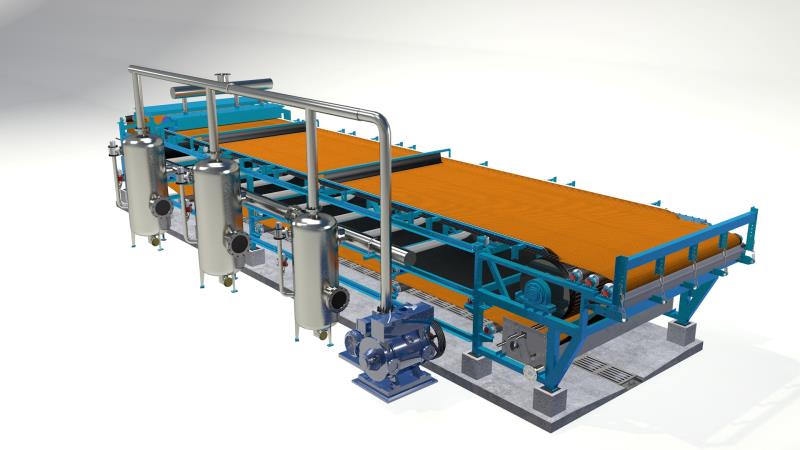
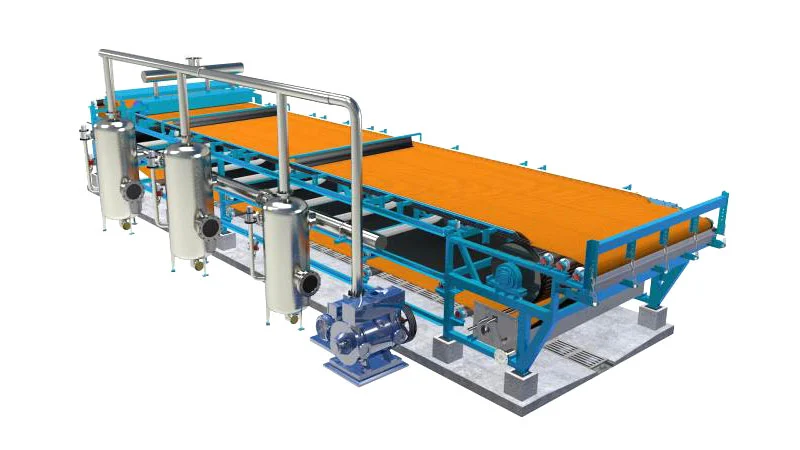
The vacuum tanks, main vacuum pipe, exchange valves, washing pumps, and vacuum pumps work together to maintain stable filtration conditions throughout the process.
Industrial Applications and Advantages
Negative pressure filter equipment is widely used in metallurgy, mining, petrochemicals, coal washing, paper, fertilizer, food, pharmaceuticals, environmental protection, flue gas desulfurization, gypsum dehydration, tailings handling, and more.
Key advantages include:
Fully automated operation covering feeding, filtration, washing, drying, and cake discharge, reducing manual labor.
High filtration and washing efficiency, producing low-moisture cakes and high throughput.
Compact design saves floor space and allows continuous, stable, and energy-efficient operation.
Simple maintenance with customizable options for diverse slurry types, minimizing downtime and costs.
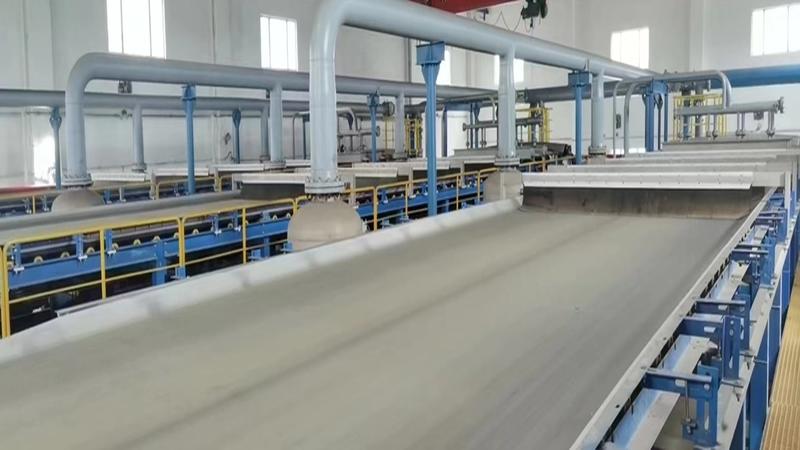
Negative Pressure vs Positive Pressure Filtration
Negative-pressure and positive-pressure equipment both separate solids from liquids, but they generate the required pressure difference in different ways.
Factor | Negative Pressure Filtration | Positive Pressure Filtration |
Driving force | Vacuum pulls liquid through the filter medium | Pressure pushes liquid through the filter medium |
Typical operation | Frequently continuous | Frequently batch or cyclic |
Typical equipment | Vacuum belt filter, ceramic disc vacuum filter, vacuum tray belt filter | Tower filter press, chamber filter press, pressure filter |
Cake washing | Well suited to continuous, multistage washing | Possible, depending on equipment design |
Cake moisture | Moderate to low, depending on the material | Often lower for fine or difficult-to-dewater materials |
Processing capacity | Suitable for continuous, high-volume production | Suitable where higher filtration pressure is required |
Best suited for | Free-filtering slurry, continuous processes and cake washing | Fine particles, compressible cakes and low-moisture requirements |
Negative-pressure filtration relies on a vacuum source to pull liquid through the medium. It is particularly suitable for processes that require continuous operation, large filtration areas, or several cake-washing stages.
Positive-pressure filtration pushes liquid through the medium using compressed air, hydraulic pressure, or another pressure source. It can generate a larger pressure difference and may therefore be more suitable for fine particles, high-resistance cakes, or applications requiring particularly low final moisture.
Neither method is universally better. The correct choice depends on slurry characteristics, required capacity, target cake moisture, cake-washing requirements, operating mode, and available installation space.
What Is a Positive and Negative Pressure Filter?
A positive and negative pressure filter combines vacuum filtration with an additional pressure, squeezing, or compression stage.
During the first stage, negative pressure removes free liquid and forms a stable filter cake. In the following stage, mechanical pressure, compressed air, a squeeze belt, a pressing cover, or high-pressure rollers may be used to remove more liquid from the formed cake.
This combined filtration method may be considered when:
vacuum filtration provides sufficient processing capacity but cannot achieve the required final cake moisture;
the slurry contains fine or compressible particles;
further mechanical dewatering is required after initial cake formation;
transportation, drying, or disposal costs are strongly affected by cake moisture;
the process requires continuous operation together with additional pressing.
The actual dewatering improvement depends on the material. Particle size, slurry concentration, cake compressibility, filtration resistance, pressure level, and operating time all affect the final result. For this reason, material testing is recommended before selecting combined-pressure equipment.
Main Types of Negative Pressure Filter Equipment
Different types of negative pressure equipment are used according to the slurry characteristics, required processing capacity, cake-washing needs, and target moisture content. Common solutions include horizontal vacuum belt filters, ceramic disc vacuum filters, and vacuum tray belt filters.
Horizontal Vacuum Belt Filter
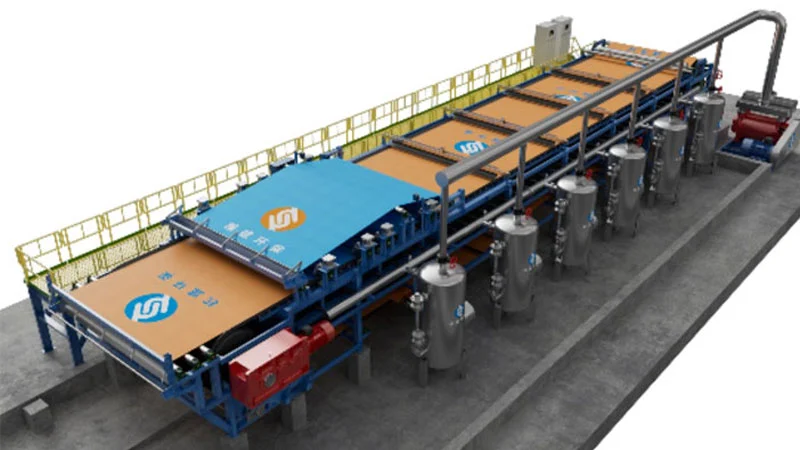
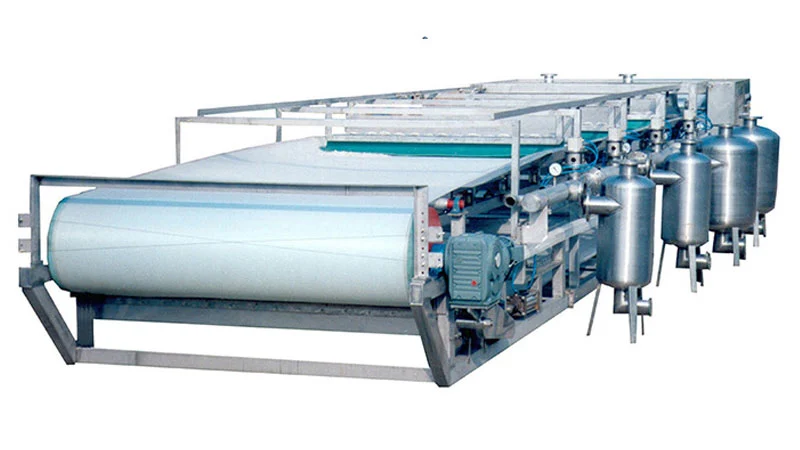
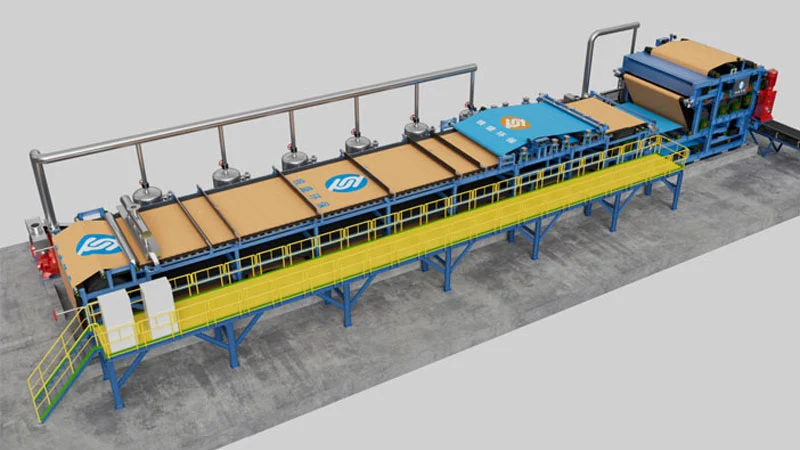
A horizontal vacuum belt filter continuously separates liquid from slurry on a moving filter cloth. Vacuum boxes beneath the belt draw filtrate through the cloth, while the formed cake moves through filtration, washing, and dewatering zones.
This equipment is suitable for high-capacity continuous processing and applications requiring effective cake washing. Hesheng's horizontal vacuum belt filter can be configured for mining tailings, FGD gypsum, phosphoric acid, chemical materials, metallurgical slurry, and other industrial processes.
Ceramic Disc Vacuum Filter
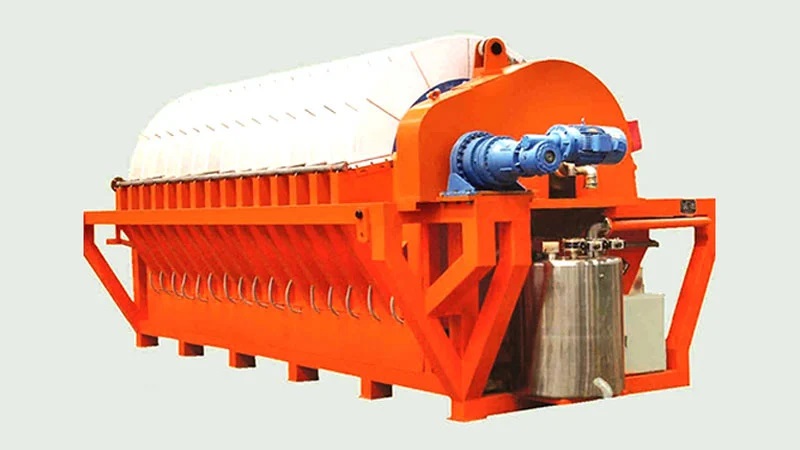
A vacuum ceramic disc filter uses porous ceramic filter plates mounted on rotating discs. Vacuum draws liquid through the ceramic plates while solids form a cake on the disc surface.
This type of equipment is commonly used for mineral concentrates and tailings because it offers continuous operation, compact installation, and relatively low filtrate moisture under suitable material conditions. The ceramic disc vacuum filter is especially suitable for applications involving fine mineral slurry and continuous dewatering.
Horizontal Vacuum Tray Belt Filter
A horizontal vacuum tray belt filter uses an indexing or intermittently moving filter belt together with separate vacuum trays. Its staged operating structure can support controlled filtration, cake washing, and discharge.
This configuration may be suitable for materials requiring defined washing zones, longer residence time, or more controlled cake handling.
When Should Combined-Pressure Equipment Be Considered?
Conventional negative-pressure equipment is effective for many free-filtering materials, but some slurry characteristics make further dewatering difficult.
Combined-pressure equipment may be more suitable when:
the filter cake remains too wet after standard vacuum filtration;
fine particles create high filtration resistance;
the cake is compressible and responds well to mechanical pressure;
downstream drying costs must be reduced;
lower cake weight is important for transportation or disposal;
the customer needs continuous filtration with an additional pressing stage.
Hesheng offers several filtration systems that combine vacuum and mechanical dewatering principles. The exact operating method differs by equipment series, so the final selection should be based on material testing and process requirements rather than equipment name alone.
How to Select the Right Filtration Equipment
Selecting filtration equipment should begin with the material and process requirements rather than the equipment name.
Selection factor | Why it matters |
Slurry composition | Determines chemical compatibility and filtration behavior |
Feed solids concentration | Affects cake formation, throughput, and equipment size |
Particle-size distribution | Fine particles may increase filtration resistance |
Required processing capacity | Determines the required filtration area |
Target cake moisture | Helps determine whether vacuum alone is sufficient |
Cake-washing requirement | Influences the number and length of washing zones |
Filtrate recovery requirement | Determines whether separate collection zones are needed |
Temperature and corrosion | Affects cloth, belt, piping, seal, and structural materials |
Operating mode | Determines whether continuous or batch equipment is preferable |
Installation space | Influences the most suitable equipment configuration |
Downstream process | Drying, transport, disposal, or product recovery may affect selection |
For accurate equipment selection, the supplier should evaluate the material rather than relying only on industry experience.
A representative laboratory or pilot filtration test can help determine:
filtration rate;
cake formation time;
achievable cake thickness;
washing efficiency;
cake moisture;
cloth suitability;
required vacuum or pressure;
expected production capacity.
Why Work With Hesheng Filter?
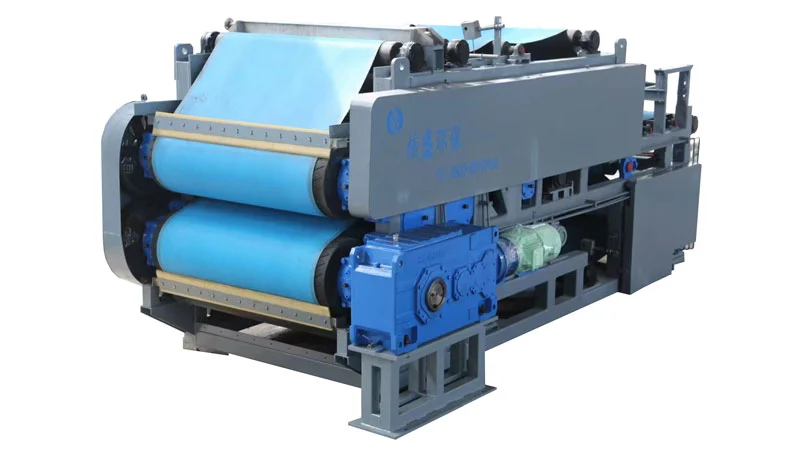
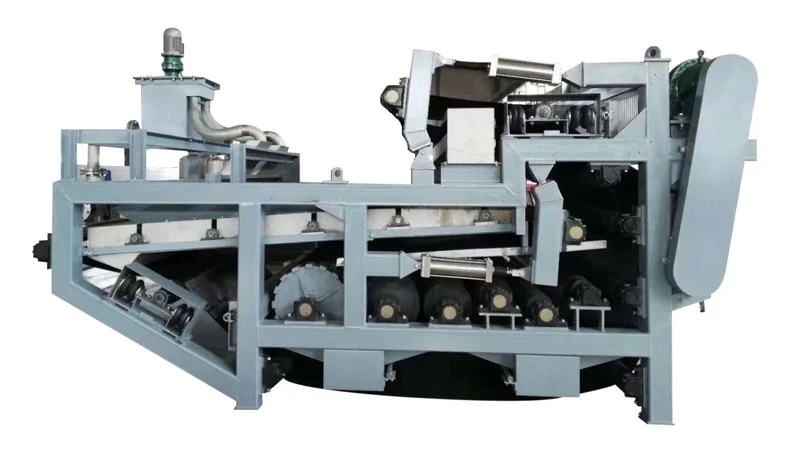
Hesheng provides several types of solid-liquid separation equipment based on negative pressure, positive pressure, and combined-pressure principles. Its product range includes horizontal vacuum belt filters, ceramic disc vacuum filters, vacuum tray belt filters, crawler vacuum pressure filters, vacuum belt squeeze filters, tower filter presses, and belt press filters.
Rather than selecting equipment only by product name, Hesheng can evaluate the slurry properties, processing requirements, target cake moisture, washing requirements, and operating conditions to recommend a suitable filtration configuration.
For a more reliable recommendation, customers should provide:
material or slurry name;
feed solids concentration;
particle-size distribution;
required processing capacity;
target cake moisture;
cake-washing requirements;
operating hours per day;
slurry temperature;
pH and corrosion conditions;
available utilities and installation space.
Frequently Asked Questions
Is negative pressure filtration the same as vacuum filtration?
Yes. Negative pressure filtration generally refers to a process in which vacuum creates the pressure difference that draws liquid through the filter medium. “Vacuum filtration” is the more widely used industry term.
Is a vacuum belt filter a negative pressure filter?
Yes. A horizontal vacuum belt filter uses vacuum boxes beneath a moving filter belt to draw liquid through the cloth and form a filter cake.
What is the difference between positive and negative pressure filtration?
Negative pressure pulls liquid through the medium using vacuum. Positive pressure pushes liquid through the medium using compressed air, hydraulic pressure, or another pressure source.
Does positive-pressure filtration always produce a drier cake?
Not always. Higher pressure can improve dewatering for some fine or resistant materials, but final moisture also depends on particle size, slurry properties, cake thickness, cycle time, and filter medium.
When is combined positive and negative pressure filtration required?
It may be suitable when vacuum filtration provides the required continuous capacity but cannot reach the target final moisture. An added pressing or squeezing stage can further dewater the formed cake.
What information is needed to select filter equipment?
The main information includes slurry composition, feed concentration, particle size, required capacity, target moisture, washing requirement, operating conditions, temperature, and corrosion characteristics.
Conclusion
Negative pressure filter equipment uses vacuum to draw liquid through a filter medium while retaining solids as filter cake. It is particularly suitable for continuous solid-liquid separation, high processing capacity, cake washing, and automated operation.
Positive-pressure filtration may be preferable for fine or difficult-to-dewater materials, while combined positive and negative pressure equipment can add a pressing or squeezing stage after vacuum cake formation.
The most suitable system should be selected according to the actual slurry characteristics, processing capacity, target cake moisture, washing requirements, operating mode, and total operating cost.
To receive an equipment recommendation from Hesheng, provide your slurry type, feed solids concentration, particle-size distribution, required capacity, target cake moisture, cake-washing requirement, temperature, and corrosion conditions.
 EN
EN
 ko
ko  fr
fr  de
de  es
es  it
it  ru
ru  pt
pt  ar
ar  fa
fa  Hesheng Filter
 Call us on:
  Email Us:
  No.255 Shenzhen North Road, Laixi City, Qingdao City, Shandong P.R, China