In coal-fired power plants, Flue Gas Desulfurization (FGD) systems are essential for removing sulfur dioxide (SO₂) from exhaust gases, producing gypsum as a byproduct. While the desulfurization tower effectively captures SO₂, the subsequent handling of wet gypsum slurry presents challenges: high moisture content leads to difficult transportation, potential secondary dust emissions during storage or handling, and increased environmental risks.
Hesheng Vacuum Belt Filter addresses these issues head-on by providing efficient, continuous dewatering of FGD gypsum slurry. This article explains how belt filters are applied in FGD projects, their working principles, and why they are important for efficient plant operation.
Role of Belt Filters in FGD Systems
In FGD processes, flue gas is treated using a limestone or lime slurry, which reacts with sulfur dioxide to form gypsum (CaSO₄·2H₂O). After absorption, the resulting slurry must be dewatered before disposal or reuse.
The vacuum belt filter is commonly used for this purpose. It helps separate solid gypsum from liquid, reducing moisture content and improving handling efficiency.
Key functions include:
Dewatering gypsum slurry
Improving solid content for transport and disposal
Reducing waste volume
Enabling reuse of by-products (e.g., gypsum for construction materials)
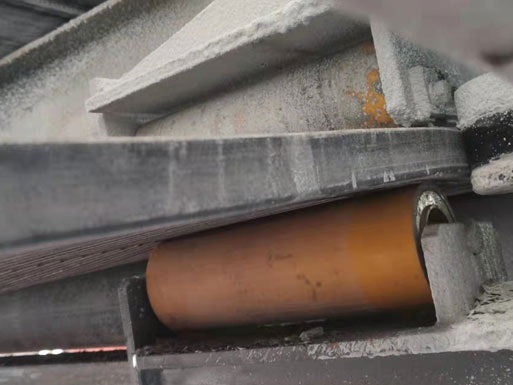
Working Principle of Vacuum Belt Filters
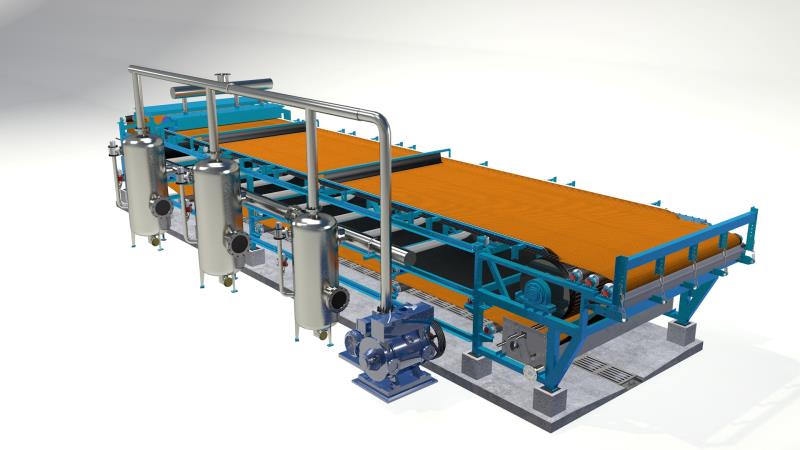
Vacuum belt filters use a continuous filtration technique. The gypsum slurry is equally spread on a moving filter belt, and vacuum suction is provided beneath it to draw liquid through the filter medium while retaining solid particles.
Process overview:
1. Slurry feeding: Gypsum slurry is fed equally onto the moving belt.
2. Filtration: Vacuum pressure draws liquid through the filter fabric.
3. Washing (optional): Solids can be washed to increase purity.
4. Dewatering: Additional vacuum zones further minimize moisture content.
5. Discharge: Filter cake is discharged at the end of the belt.
This continuous operation enables the system to manage enormous amounts of slurry while maintaining consistent performance, making it suited for power plant-scale FGD applications.
Application in FGD Gypsum Dewatering Systems
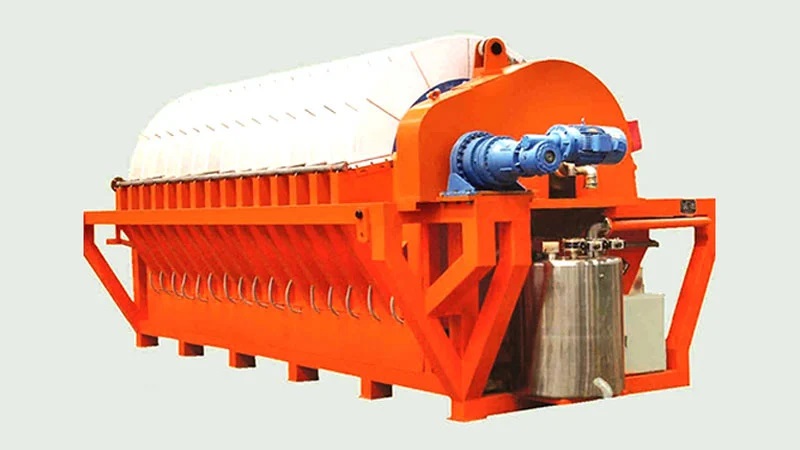
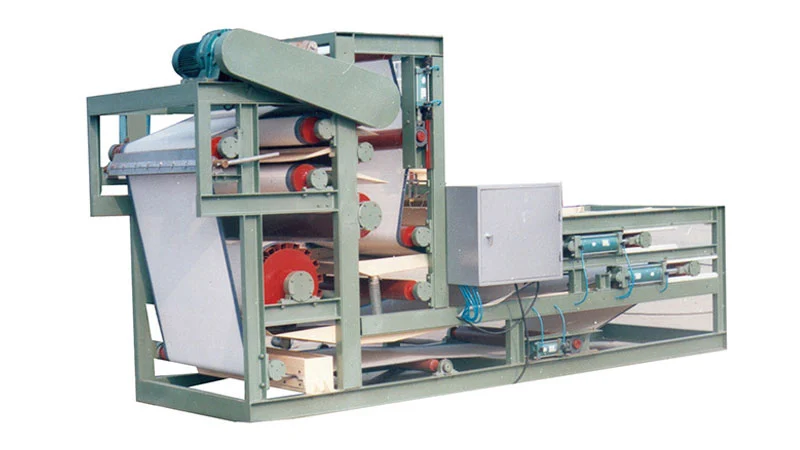
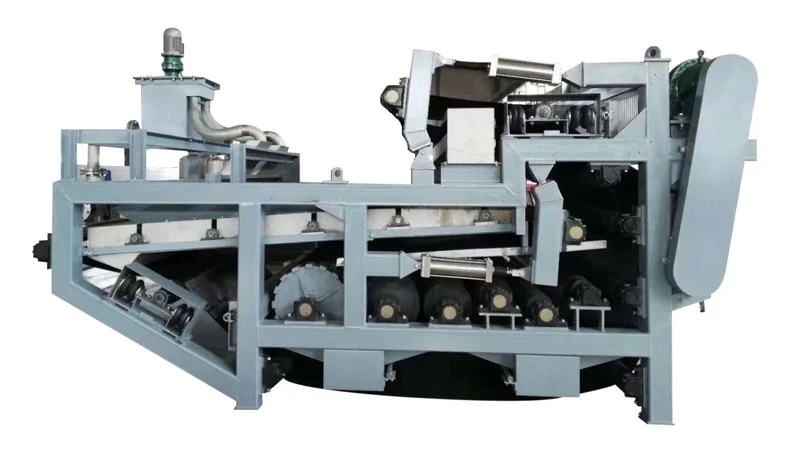
Hesheng Filters DU horizontal vacuum belt filter has been effectively used in power plant desulfurization gypsum systems (FGDs).
The DU belt vacuum filters used in these applications are specifically developed for wet desulfurization processes and have been optimized to withstand the tiny particles and relatively high viscosity slurries produced by the limestone-gypsum method. This helps to alleviate the issues frequently connected with gypsum dewatering in FGD systems.
The system's continuous operation and vacuum-assisted structure promote efficient solid-liquid separation and help to steady downstream gypsum handling.
Advantages of the Vacuum Belt Filter in FGD Applications
Belt vacuum filters provide several practical advantages when used in FGD systems:
1. Continuous Operation
Unlike batch filtration methods, belt filters operate continuously, aligning well with the steady output of FGD scrubbers.
2. Adaptability to Slurry Characteristics
They are suitable for fine particles and high-viscosity slurries produced in limestone-gypsum processes.
3. Stable Dewatering Performance
With proper control of vacuum levels and operating parameters, the system maintains consistent filtration and dewatering results.
4. Industrial Scalability
Belt filters are widely used in large-scale industrial environments such as power plants where continuous processing is required.
Key Factors Affecting Performance
Several operational factors influence the efficiency of belt filtration in FGD systems:
Slurry properties: Particle size distribution, concentration, and viscosity
Vacuum level: Affects dewatering efficiency and cycle time
Filter cloth selection: Impacts filtration rate and cake release performance
Belt speed: Must be balanced with feed rate and required throughput
Washing stage (if applied): Can improve gypsum purity
Proper system design and parameter optimization are essential to achieve stable and efficient operation.
Maintenance Considerations
Regular maintenance is important to ensure long-term performance and reliability:
Inspect and clean filter cloths to prevent clogging
Monitor vacuum system performance
Check belt alignment and tension
Replace worn components when necessary
Ensure proper sealing to avoid vacuum leakage
Preventive maintenance helps maintain consistent dewatering efficiency and reduces the risk of unplanned downtime.
Integration in Power Plant FGD Systems
In modern power plants, belt vacuum filters are typically integrated into the gypsum dewatering section of the FGD system. The resulting low-moisture gypsum can then be:
By improving dewatering efficiency, belt filters contribute to the overall stability and operability of FGD systems.
Belt vacuum filters play a critical role in FGD systems by enabling efficient solid-liquid separation of gypsum slurry. While they do not directly filter air, they are an essential part of the desulfurization process, supporting stable operation of flue gas treatment systems in power plants.
With application-specific designs such as DU belt vacuum filters, Hesheng Filters provides solutions tailored to wet desulfurization environments, helping ensure reliable dewatering performance and consistent industrial operation in FGD projects.
 EN
EN
 ko
ko  fr
fr  de
de  es
es  it
it  ru
ru  pt
pt  ar
ar  fa
fa  Hesheng Filter
 Call us on:
  Email Us:
  No.255 Shenzhen North Road, Laixi City, Qingdao City, Shandong P.R, China