A horizontal vacuum belt filter is a continuous solid–liquid separation machine widely used in mining, metallurgy, chemical, environmental protection, and wastewater treatment for dewatering sludge, slurry, and fine particles.
Despite their efficiency, vacuum belt filters often face operational issues such as belt deviation, filter cloth clogging, poor sealing, low filtration rate, and excessive power consumption. These problems can reduce production efficiency, increase operating costs, and shorten equipment life if not addressed promptly.This guide explains the most common problems in vacuum belt filters and provides practical, field-tested solutions to help you maintain stable operation, improve dewatering performance, and reduce downtime.
What Is a Horizontal Vacuum Belt Filter?
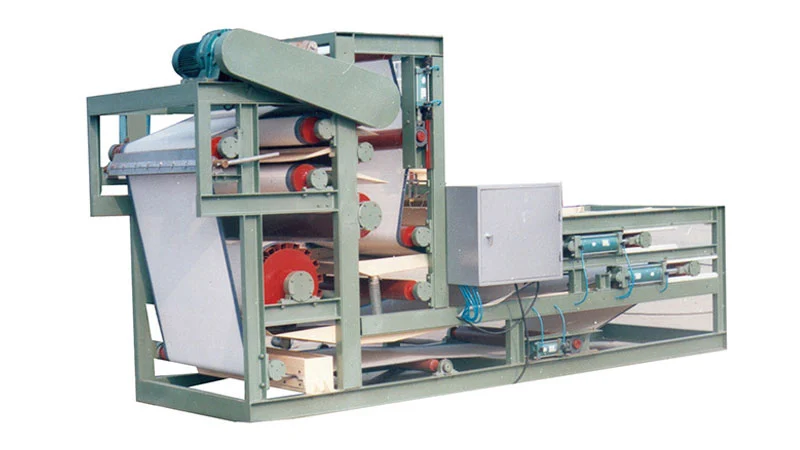
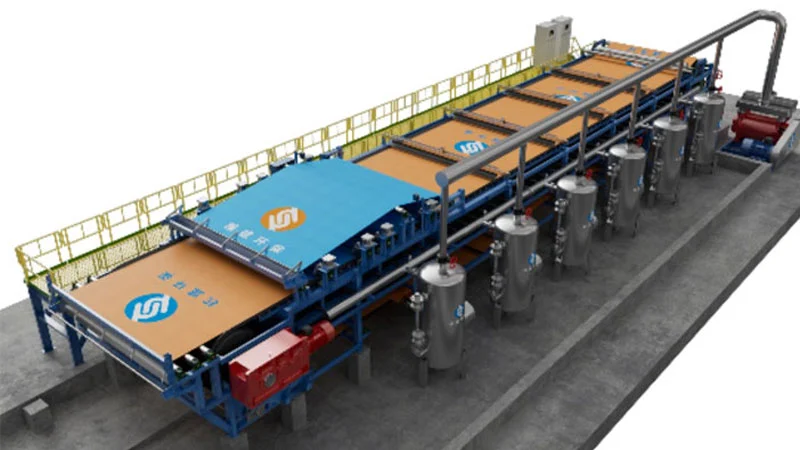
A horizontal vacuum belt filter is a continuous industrial filter that uses a moving filter belt supported by a vacuum box to separate solids from liquids. The slurry is fed onto the belt, vacuum is applied through the vacuum box, and liquid is drawn through the filter media while the solid cake moves with the belt and is discharged at the end.
Key components:
Filter belt and filter cloth
Vacuum box and vacuum pump
Drive system and rollers
Tensioning and tracking system
Washing and flushing system
Control system
Typical applications include:
Mining and mineral beneficiation: concentrate and tailings dewatering
Chemical industry: suspension filtration, catalyst recovery
Environmental protection: municipal and industrial sludge dewatering
Food and pharmaceutical: clarification and separation processes
Top 7 Common Problems in Vacuum Belt Filters and How to Solve Them
1. Filter Belt Deviation (Belt Tracking Issues)
Problem:
The filter belt runs off-center, causing uneven wear, reduced filtration efficiency, and potential belt damage.
Main causes:
Uneven load distribution from slurry feed
Misaligned or uneven rollers
Worn or improperly adjusted tracking rollers
Incorrect belt tension
Rust or sticking in the correction slider or air valve
Solutions:
Check and adjust belt tension
Inspect rollers and bearings
Verify installation balance
Adjust slurry distribution
Clean sludge inlet distribution facilities.
Adjust the flat mud plate’s position to ensure even slurry distribution.
Replace the mud scraper if needed.
Check correction system
If the air pipe or air bag is damaged, replace it immediately.
Lubricate or replace rusted correction sliders.
Repair faulty correction air valves or adjust correction angle correctly.
2. Filter Cloth Clogging and Reduced Washing Speed
Problem:
Washing speed decreases, cake quality deteriorates, and filtration rate drops due to clogged filter cloth pores.
Main causes:
Poor crystallization or high filter cake thickness
Hard clogging of filter cloth due to fine particles
Insufficient vacuum level
Inadequate or leaking flushing water system
Overuse of flocculant causing pore blockage
Solutions:
Inspect the flushing water system
Check flushing water pipeline for leaks.
Verify the flushing water pump is operating correctly.
Monitor flushing water pressure and clean clogged nozzles promptly.
Adjust flocculant dosage and type
Improve process parameters
Adjust liquid–solid ratio.
Reduce feed rate if cake is too thick.
Optimize vacuum level and slurry concentration.
Replace or clean filter cloth
If filter cloth is severely clogged or damaged, replace it.
Periodically clean the entire system to prevent solids and sludge buildup.
3. Poor Sealing and Filtrate Leakage
Problem:
The filter fails to form a sealed filtration chamber, leading to filtrate leakage and reduced dewatering performance.
Main causes:
Insufficient pressure on the filter belt or plates
Deformation or damage of filter plates or belt support
Incorrect placement of filter cloth (wrinkles or tears)
Damaged rubber pads or sealing elements
Solutions:
Check pressure levels
Inspect filter plates and belt support
Check for deformation, bulging, or damage at plate edges.
Correct or replace damaged plates and support rails.
Verify filter cloth placement
Ensure filter cloth is flat, without wrinkles or damage.
Replace damaged or worn filter cloth immediately.
Check sealing elements
Inspect rubber pads, gaskets, and seals.
Replace worn or deformed sealing elements.
4. Low Filtration Rate and Reduced Production Capacity
Problem:
Filtration rate decreases while washing remains normal, leading to lower throughput.
Main causes:
Too large liquid–solid ratio
Local clogging of filter plate holes
Blockage in gas–liquid separator or filtrate atmosphere retreat area
Bubbles or plugs in rubber tubes
Solutions:
Adjust process indicators
Clean blocked components
Inspect gas–liquid separator
Verify vacuum system performance
Check vacuum pump, piping, and seals for leaks or performance loss.
Maintain necessary pressure levels to drive liquid through the filter media.
5. Excessive Power Consumption and Overload
Problem:
The power system operates under long-term overload, causing overheating, reduced efficiency, and increased energy costs.
Main causes:
Long-term heavy load operation
Hydraulic oil overheating in hydraulic systems
Insufficient pressure generation leading to inefficient operation
Over-tightened belts or excessive friction
Solutions:
Reduce feed quantity
Check and adjust tensioning pressure
Improve lubrication
Regularly lubricate bearings, chains, sprockets, gears, and racks.
Add lubricant to pneumatic system lubricators in a timely manner.
Monitor hydraulic system
Check hydraulic oil temperature and condition.
Replace overheated or degraded hydraulic oil.
Ensure hydraulic system can generate sufficient pressure.
6. High Moisture Content in Filter Cake
Problem:
The filter cake moisture is higher than expected, reducing product quality and increasing transportation or disposal costs.
Main causes:
Insufficient vacuum level
Improper flocculant dosage or type
Excessive belt speed
Incorrect tensioning pressure
Filter cloth blinding or clogging
Solutions:
Optimize flocculant selection and dosage
Adjust belt speed
Adjust belt tension
Set appropriate tensioning pressure.
For belt filter press applications, typical pressure settings are 0.5–0.6 MPa.
Check vacuum system
Clean or replace filter cloth
7. Electrical Control System Failures and Mechanical Breakdowns
Problem:
Electrical control failures, loose fasteners, or mechanical breakdowns cause unexpected downtime.
Main causes:
Electrical component failure or insulation degradation
Accumulation of dirt and residual filtrate
Loose fasteners due to vibration
Lack of regular lubrication and maintenance
Solutions:
Cut off power and inspect
If electrical control system fails, cut off power and shut down the machine for repair or replace components.
Regularly measure insulation performance of electrical appliances.
Keep machine and environment clean
Check and tighten fasteners
Lubricate moving parts
Lubricate bearings, chains, sprockets, gears, and racks regularly.
Grease piston rods regularly.
Pre-use inspections
Why Choose Hesheng as Your Horizontal Belt Filter Supplier
As a professional horizontal belt filter supplier, Hesheng Filters provides engineered solutions designed to minimize operational issues and maximize filtration efficiency.
Our systems feature:
High-efficiency vacuum distribution system
Wear-resistant filter belt design
Modular maintenance structure
Optimized slurry feeding technology
Custom engineering for mining and chemical industries
Conclusion
Vacuum belt filters and horizontal vacuum belt filters are essential dewatering equipment in mining, metallurgy, chemical, environmental protection, and wastewater treatment industries. However, they face common operational challenges such as belt deviation, filter cloth clogging, poor sealing, low filtration rate, excessive power consumption, high cake moisture, and electrical/mechanical failures.
By following the troubleshooting steps and maintenance best practices outlined in this guide, you can:
Improve dewatering performance and product quality.
Reduce downtime and operating costs.
Extend the service life of your equipment.
Maintain stable, continuous operation in harsh industrial environments.
As a leading horizontal belt filter supplier with over 30 years of experience, Hesheng provides advanced filtration solutions, including horizontal vacuum belt filters and CF Ceramic Disc Vacuum Filters, designed for high-precision dewatering and long-term stability in mining, metallurgy, chemical, and environmental applications.
 EN
EN
 ko
ko  fr
fr  de
de  es
es  it
it  ru
ru  pt
pt  ar
ar  fa
fa  Hesheng Filter
 Call us on:
  Email Us:
  No.255 Shenzhen North Road, Laixi City, Qingdao City, Shandong P.R, China