Solid-liquid separation is a critical process in mining, metallurgy, chemical processing, and mineral beneficiation. When slurry contains valuable minerals or fine particles that require continuous dewatering, selecting the right filtration technology directly affects production efficiency, energy consumption, and final cake moisture.
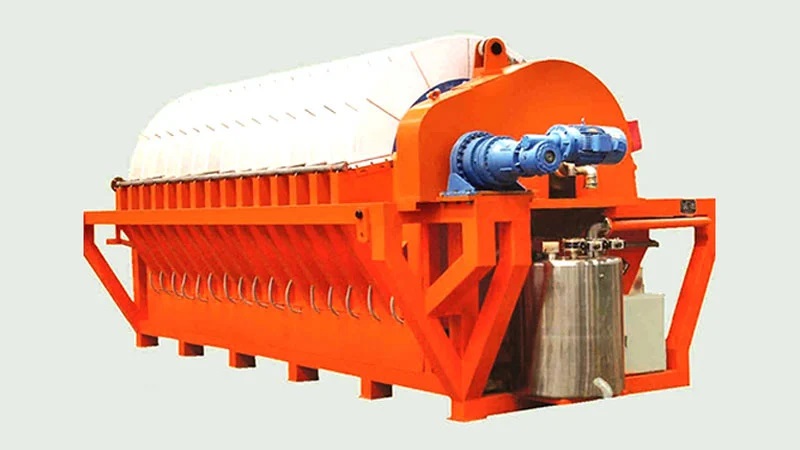
A ceramic disc filter is one of the advanced continuous vacuum filtration solutions designed for applications that require stable operation, clear filtrate, and efficient moisture removal. Unlike traditional filter cloth systems, ceramic disc filters use microporous ceramic plates as the filtration medium, combining vacuum pressure with capillary action to achieve continuous solid-liquid separation.
Hesheng develops and manufactures industrial filtration equipment for mineral processing and industrial applications. Our CF series ceramic disc vacuum filters are designed for concentrate dewatering, tailings treatment, and other slurry filtration processes where reliable performance and customized configurations are required.
This guide explains how a ceramic disc filter works, key factors affecting performance, how to select the right model, and the differences between ceramic disc filters and other vacuum filtration systems.
What Is a Ceramic Disc Filter?
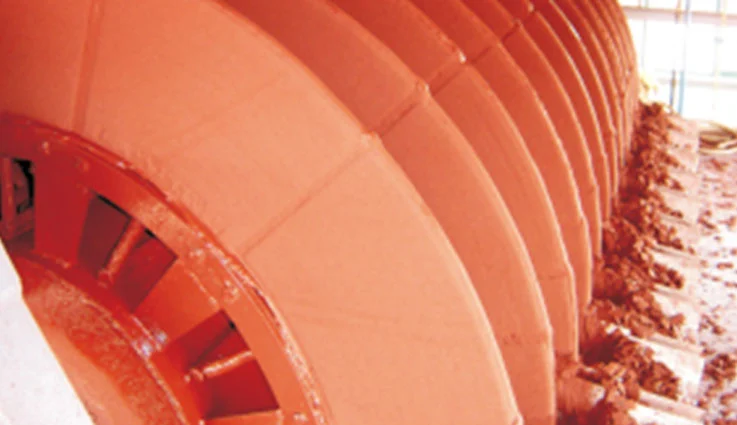
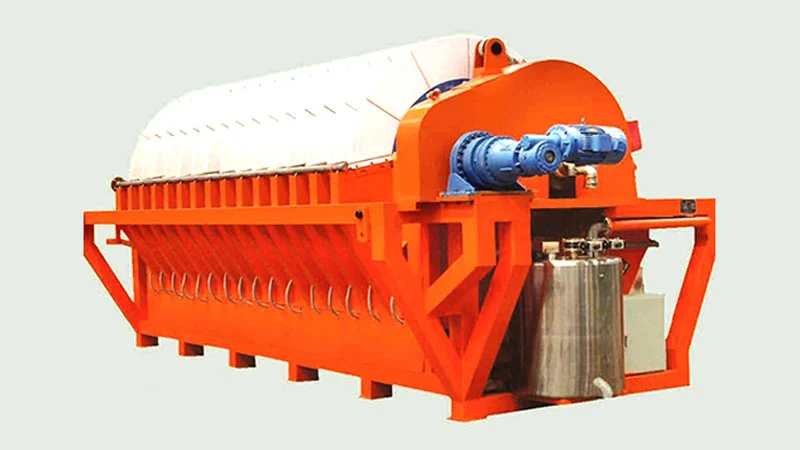
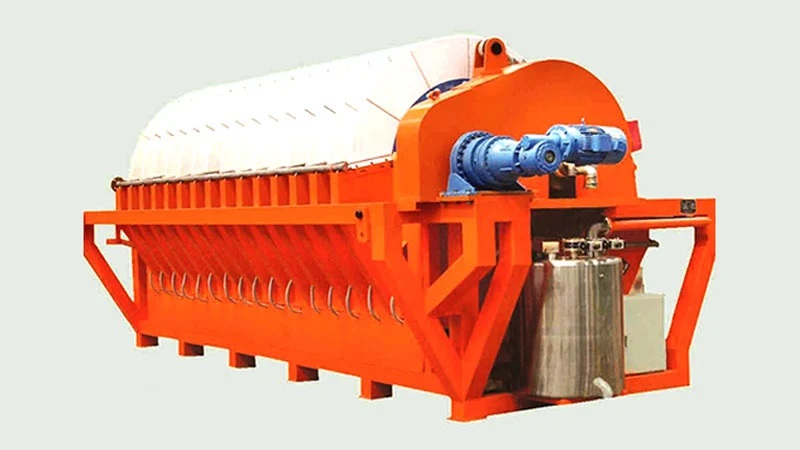
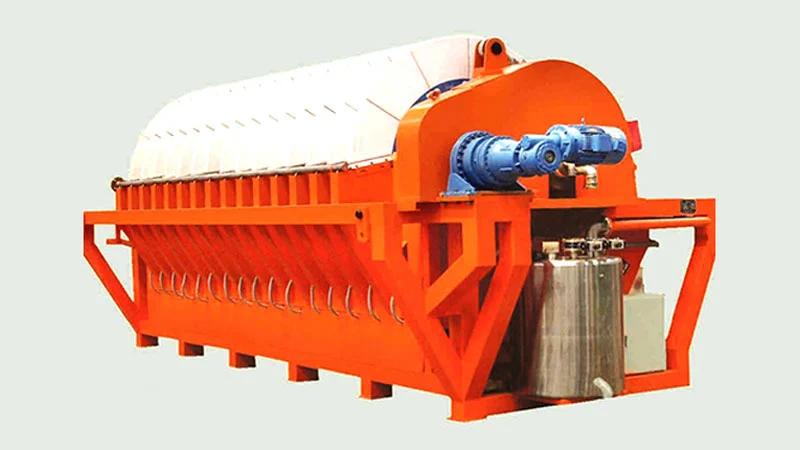
A ceramic disc filter is a continuous vacuum filtration machine that uses multiple rotating ceramic filter discs to separate solids from liquids. Each disc consists of microporous ceramic plates connected to a vacuum system. During operation, the ceramic discs partially immerse into the slurry tank while rotating continuously.
The filtration process relies on two main mechanisms:
Vacuum pressure: creates a pressure difference that pulls liquid through the ceramic plate.
Capillary action: the microscopic pores inside the ceramic material help retain liquid separation performance while preventing air penetration under normal operating conditions.
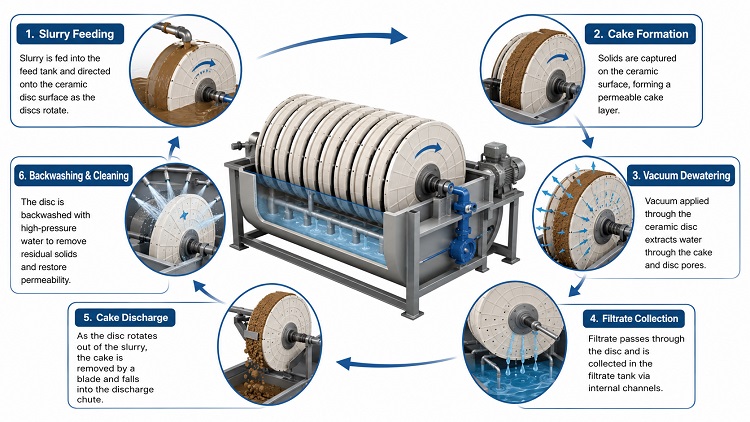
As the discs rotate through different zones, the equipment completes filtration, dewatering, cake discharge, and ceramic plate cleaning in a continuous cycle.
Common names for this equipment include:
Ceramic vacuum filter
Ceramic vacuum disc filter
Vacuum ceramic disc filter
Ceramic rotary disc vacuum filter
Vacuum disc filter
These terms generally describe the same type of continuous ceramic-based vacuum filtration technology used for slurry dewatering.
For industrial filtration solutions covering ceramic disc filters, belt filters, and other separation systems, Hesheng provides customized equipment selection based on material characteristics and process requirements.
How Does a Ceramic Disc Filter Work?
Understanding the working principle of a ceramic disc filter helps engineers select the correct filtration technology for their applications.
The filtration process normally includes five main stages.
1. Slurry Feeding and Cake Formation
The rotating ceramic discs enter the slurry tank, where solid particles begin to accumulate on the ceramic plate surface.
Vacuum pressure draws liquid through the microporous ceramic material, while solid particles remain outside the ceramic surface and gradually form a filter cake.
The thickness and structure of the cake depend on:
A stable cake layer is essential for achieving consistent filtration performance.
2. Vacuum Dewatering
When the ceramic discs leave the slurry tank, vacuum continues to remove additional moisture from the filter cake.
Compared with conventional filter cloth systems, ceramic plates provide excellent air-tightness because the ceramic pores maintain liquid permeability while reducing unnecessary air leakage.
The final cake moisture is influenced by:
Vacuum level
Filtration time
Cake permeability
Ceramic plate condition
Slurry properties
3. Filtrate Collection
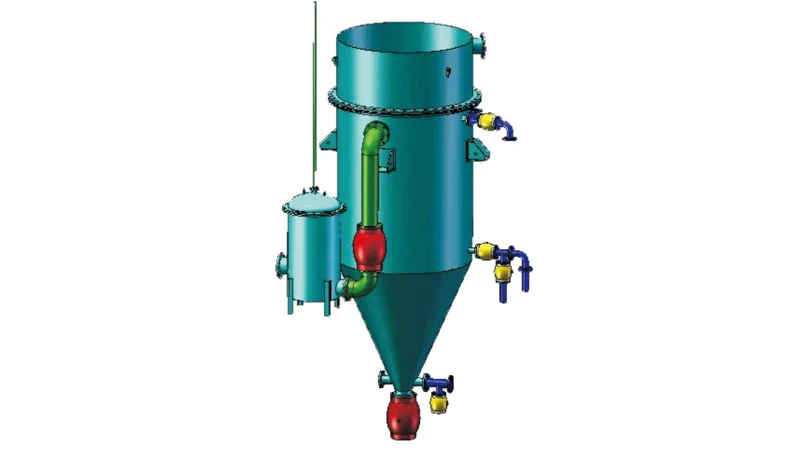
The separated liquid passes through internal channels inside the ceramic filter plates and enters the filtrate collection system.
A well-designed ceramic disc filter can produce relatively clear filtrate, allowing plants to recycle process water and improve overall water management.
4. Filter Cake Discharge
After dewatering, the filter cake reaches the discharge area.
A scraper mechanism removes the cake from the ceramic plate surface while minimizing damage to the ceramic material.
The continuous discharge process allows ceramic disc filters to operate efficiently in large-scale industrial applications.
5. Ceramic Plate Cleaning
Over time, fine particles may enter ceramic pores and reduce filtration performance.
To maintain stable capacity, ceramic disc filters normally use cleaning systems including:
Proper cleaning frequency depends on slurry characteristics and operating conditions.
Key Factors Affecting Ceramic Disc Filter Performance
Selecting a ceramic disc filter requires more than choosing filtration area. Several process factors influence the final equipment performance.
Factor | Impact on Filtration Performance |
Particle size distribution | Fine particles may reduce permeability and require optimized cleaning |
Feed solids concentration | Influences cake formation speed and filtration capacity |
Slurry viscosity | Higher viscosity can reduce filtrate flow rate |
Vacuum level | Affects moisture removal efficiency |
Ceramic plate condition | Blocked pores reduce filtration performance |
Rotation speed | Determines filtration time and cake thickness |
Cake permeability | Directly affects dewatering efficiency |
Before selecting a ceramic vacuum filter, engineers should evaluate actual slurry characteristics instead of relying only on theoretical capacity calculations.
Ceramic Disc Filter Selection Guide: What Information Is Needed?
Choosing the right ceramic disc filter model requires understanding both the material and production requirements.
1. Determine the Material Characteristics
Important material information includes:
Different materials create different filtration behaviors. For example, iron concentrate, copper concentrate, and fine tailings may require different filtration configurations.
2. Define Required Processing Capacity
The required filtration capacity depends on:
Hesheng recommends evaluating filtration area based on actual process conditions rather than selecting equipment only by disc diameter or machine size.
3. Consider Cake Moisture Requirements
Many industries select ceramic disc filters because they need lower cake moisture and stable continuous operation.
Important factors include:
Target moisture content
Cake thickness
Vacuum conditions
Material permeability
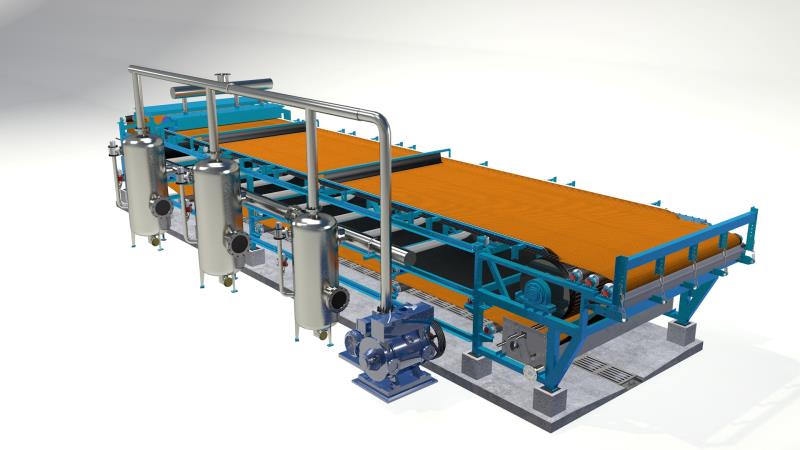
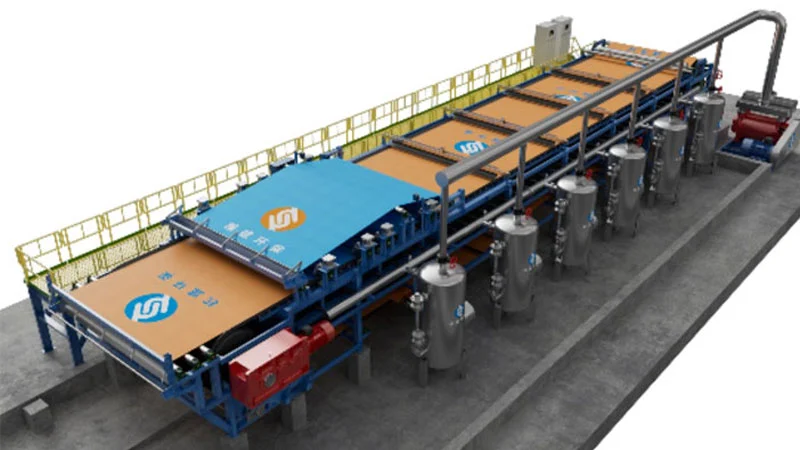
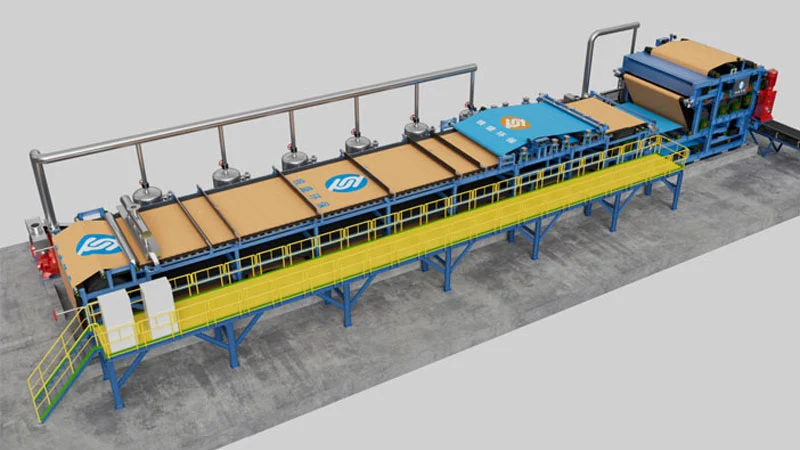
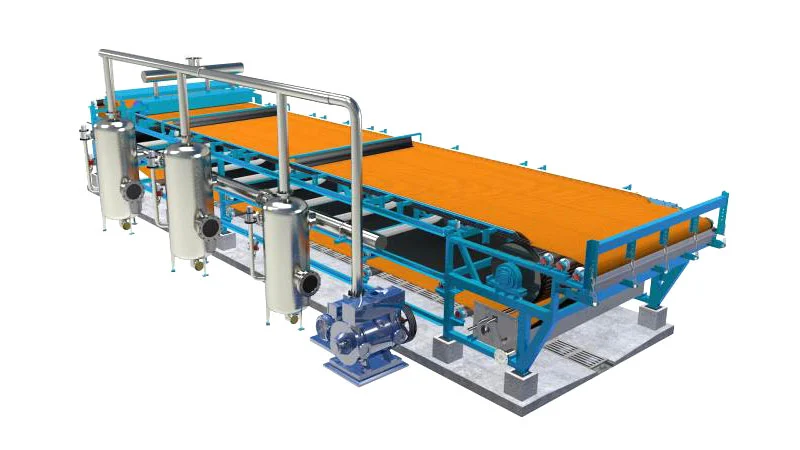
For applications requiring more flexible washing zones or different filtration stages, other systems such as a horizontal vacuum belt filter may also need evaluation.
Hesheng provides different solid-liquid separation solutions, including horizontal vacuum belt filtration systems, depending on material and process requirements.
Ceramic Disc Filter vs. Horizontal Vacuum Belt Filter
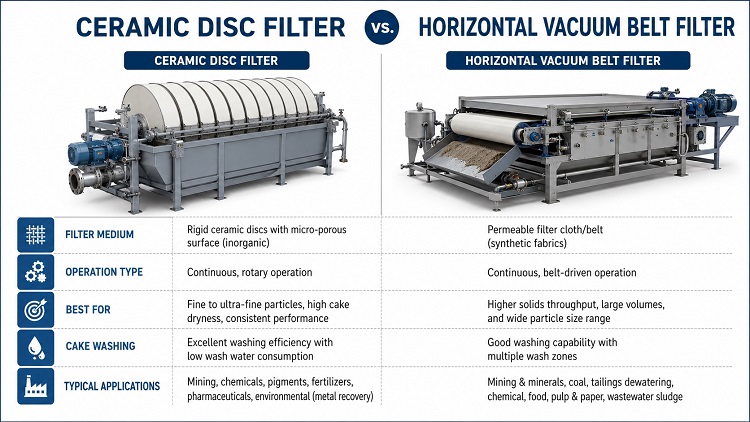
Both ceramic disc filters and horizontal vacuum belt filters are continuous vacuum filtration systems, but they are designed for different process requirements.
Comparison Factor | Ceramic Disc Filter | Horizontal Vacuum Belt Filter |
Filtration medium | Microporous ceramic plates | Filter cloth |
Operation type | Continuous rotary filtration | Continuous horizontal belt filtration |
Main advantage | Stable dewatering and clear filtrate | Flexible filtration zones and cake washing |
Typical applications | Mineral concentrates, tailings, fine slurry | Mining, chemicals, FGD gypsum, materials requiring washing |
Cake discharge | Scraper discharge from ceramic plates | Belt movement and cake discharge |
Cleaning method | Backwashing, ultrasonic and chemical cleaning | Filter cloth washing |
Best suited for | Stable fine-particle slurry dewatering | Processes requiring multiple treatment zones |
The best choice depends on slurry characteristics, required cake moisture, washing requirements, and plant conditions.
As an experienced filter machine supplier, Hesheng offers a broad portfolio of industrial separation equipment and tailored filtration solutions for different processing requirements.
Why Choose Hesheng Ceramic Disc Filters?
Hesheng focuses on providing customized solid-liquid separation solutions for global industrial customers.
Our ceramic disc filtration solutions support:
Customized filtration area selection
Equipment configuration based on slurry characteristics
Ceramic plate filtration technology
Mineral processing applications
Technical support during equipment selection
Complete filtration system solutions
Instead of selecting equipment only by model size, Hesheng evaluates important process parameters including slurry concentration, particle characteristics, required throughput, and final cake moisture.
This approach helps customers select filtration equipment that matches actual production requirements.
Common Applications of Ceramic Disc Filters
Ceramic disc filters are widely used in industries requiring continuous slurry dewatering.
Typical applications include:
Mining Concentrate Dewatering
Used for iron ore concentrate, copper concentrate, zinc concentrate, and other mineral products requiring efficient moisture removal.
Tailings Treatment
Ceramic vacuum filters can support tailings management by improving solid-liquid separation and helping recover process water.
Metallurgical Processing
Suitable for various mineral beneficiation processes where continuous filtration is required.
Chemical and Industrial Materials
Used for selected chemical crystals and industrial slurry applications where ceramic filtration performance provides advantages.
Frequently Asked Questions About Ceramic Disc Filters
1. What is the working principle of a ceramic disc filter?
A ceramic disc filter uses rotating microporous ceramic plates and vacuum pressure to separate solids from liquids. Liquid passes through the ceramic plate while solids remain on the surface and form a filter cake.
2. What materials can be processed by a ceramic vacuum filter?
Ceramic vacuum filters are commonly used for mineral concentrates, tailings, metallurgical materials, and selected industrial slurry applications. The final suitability depends on particle size, viscosity, and filtration characteristics.
3. What affects ceramic disc filter capacity?
Capacity is affected by filtration area, slurry concentration, particle size distribution, viscosity, vacuum level, cake permeability, rotation speed, and ceramic plate condition.
4. How are ceramic filter plates cleaned?
Ceramic filter plates are normally cleaned through reverse washing. For applications with pore blockage or difficult materials, ultrasonic cleaning and chemical cleaning may also be applied.
5. What is the difference between a ceramic disc filter and a vacuum disc filter?
A ceramic disc filter uses microporous ceramic plates as the filtration medium, while traditional vacuum disc filters usually use filter cloth. Ceramic plates provide different filtration characteristics, especially for certain fine mineral slurry applications.
6. How do I select the right ceramic disc filter model?
Selection requires information including slurry type, feed capacity, solids concentration, particle size distribution, target cake moisture, washing requirements, and operating conditions. Material testing is recommended for complex slurry applications.
Conclusion
A ceramic disc filter provides a continuous and efficient solution for solid-liquid separation where stable dewatering, clear filtrate, and reliable operation are required.
Understanding the working principle, filtration factors, and equipment selection criteria helps engineers avoid unsuitable equipment choices and improve overall process performance.
For mining, metallurgy, tailings treatment, and industrial slurry applications, Hesheng evaluates each project according to actual material characteristics and production requirements. By combining ceramic filtration technology with engineering experience, Hesheng helps customers develop practical and efficient filtration solutions.
If you are selecting a ceramic vacuum filter for your project, provide your slurry characteristics, processing capacity, and moisture requirements. Hesheng can recommend a suitable filtration configuration based on your application.
 EN
EN
 ko
ko  fr
fr  de
de  es
es  it
it  ru
ru  pt
pt  ar
ar  fa
fa  Hesheng Filter
 Call us on:
  Email Us:
  No.255 Shenzhen North Road, Laixi City, Qingdao City, Shandong P.R, China