Types of Disc Filters Available from Hesheng
LPZ Vacuum Vertical Disc Filter
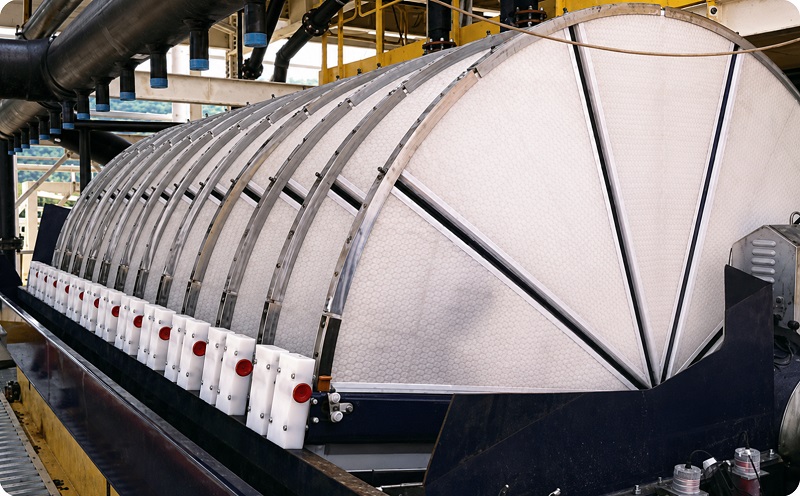
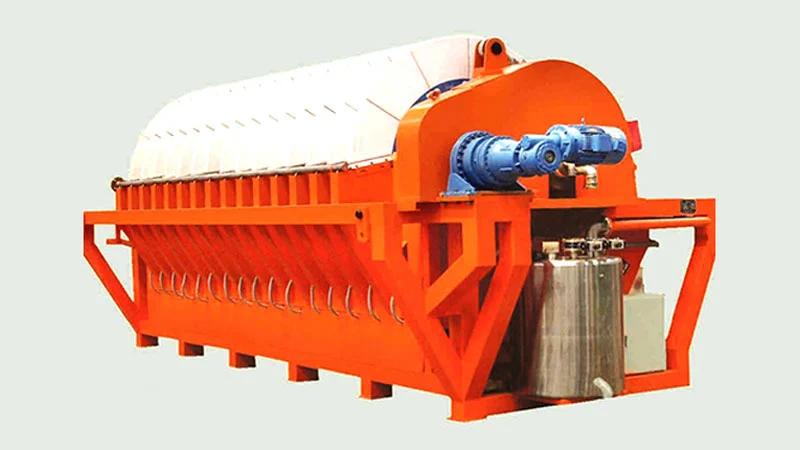
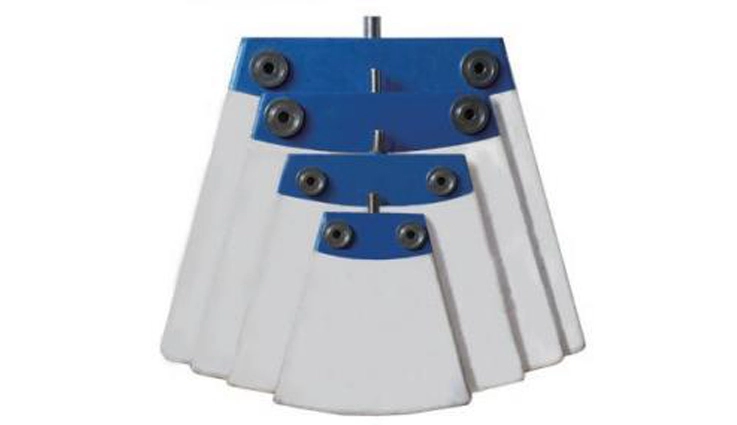
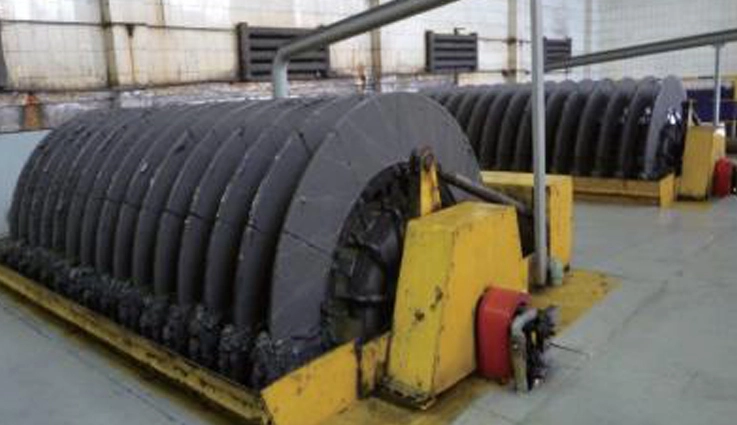
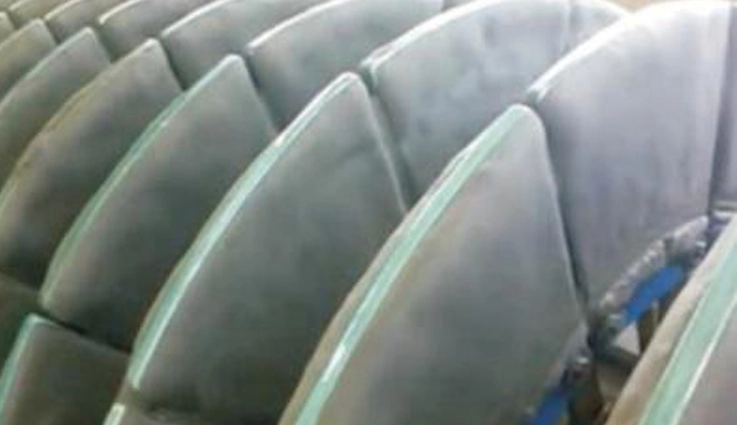
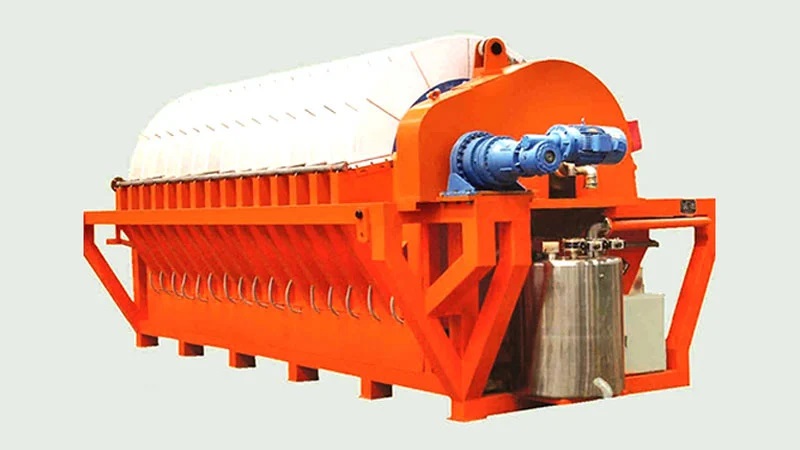
The LPZ vacuum vertical disc filter uses several vertical discs to form a continuous filtration platform. Each disc consists of multiple sector-shaped filter chambers, and each sector acts as an independent filtration unit covered by filter cloth.
During operation, the disc assembly rotates continuously while vacuum draws slurry onto both sides of the filter sectors. Solids form a cake on the filter cloth while filtrate passes through the filter medium and is collected by the vacuum filtrate discharge system.
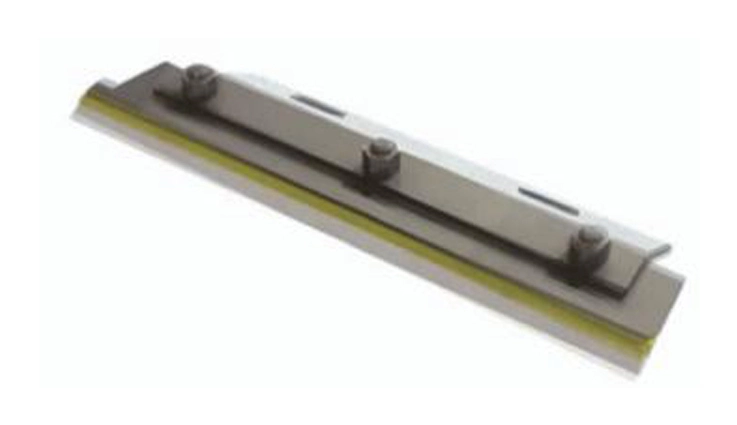
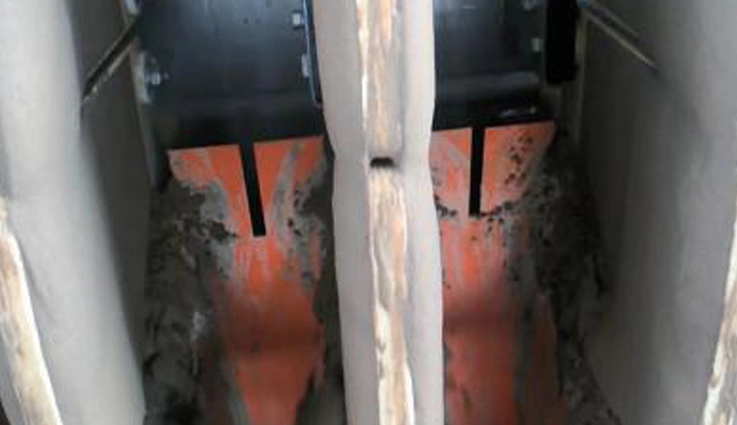
As each disc rotates through different process zones, the filter cake can undergo further dewatering and, depending on the process, washing and drying. Cake is discharged using back blowing together with a scraper or flexible discharge mechanism before the filter cloth enters its regeneration cycle.
LPZ systems are designed with features including automatic high-pressure filter cloth washing, adjustable slurry agitation, modular filter-sector connections and multi-zone distribution-valve control.
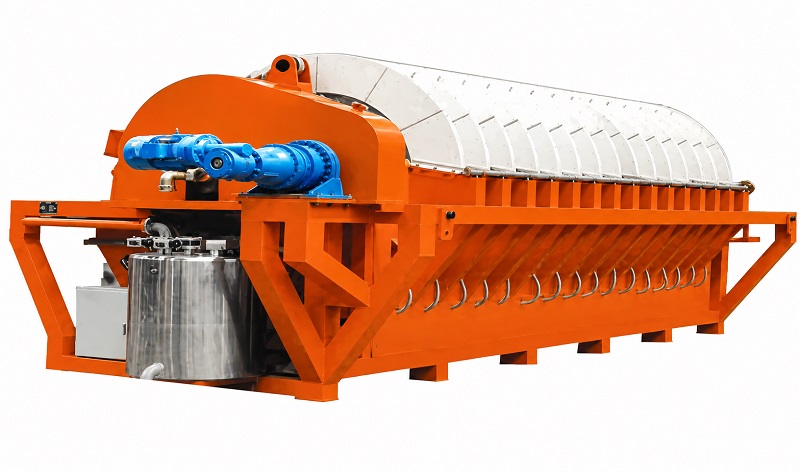
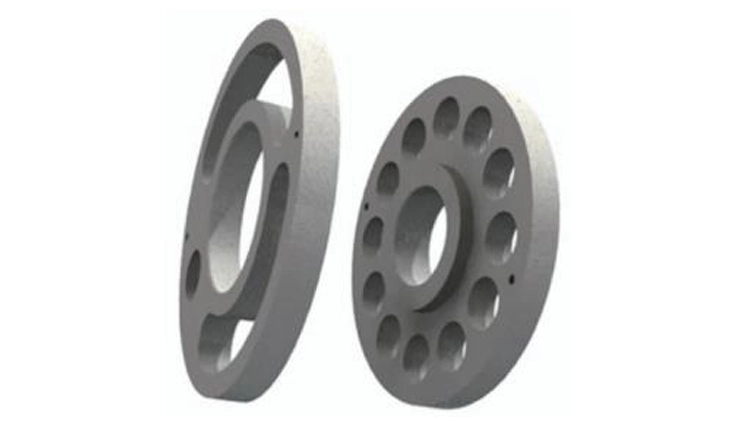
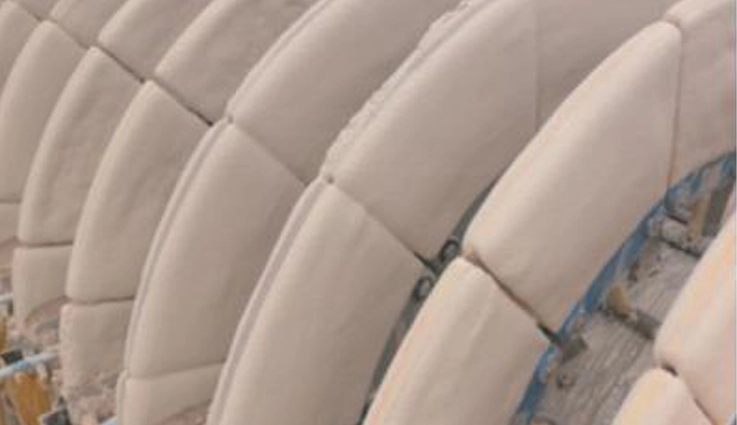
The CF vacuum ceramic disc filter uses microporous ceramic plates as the filtration medium. Vacuum negative pressure and the capillary characteristics of the ceramic plate draw liquid through the plate while solid particles are retained on its outer surface.
The ceramic discs rotate continuously through slurry absorption, cake drying, cake discharge and plate regeneration. After dewatering, the cake is removed by a ceramic scraper. The plates are then backwashed from the inside out with process water or compressed air.
For deeper regeneration, ultrasonic cleaning can be combined with low-concentration acid washing to remove fine solids retained within the ceramic pores.
The CF configuration is used for concentrate and tailings dewatering and other suitable fine-particle slurry applications.
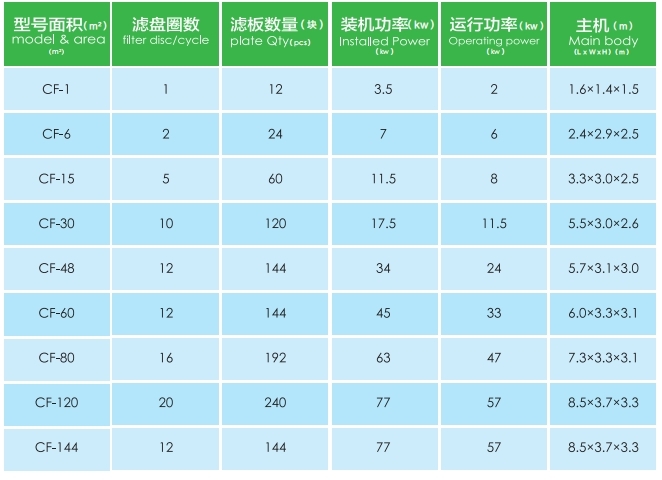
Specifications of Disc Filter
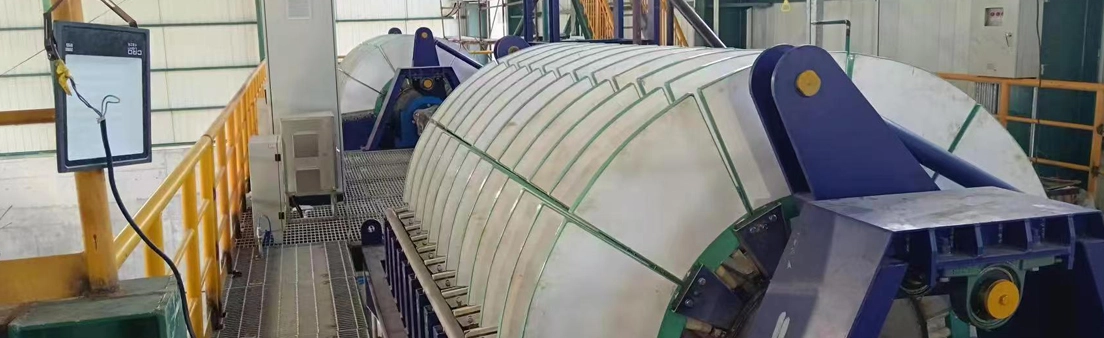
How Disc Filtration Works
A vacuum disc filter operates by continuously rotating multiple filtration sectors through different stages of the solid-liquid separation process.
1. Slurry Filtration
Part of each rotating disc is immersed in the slurry. Vacuum creates a pressure difference across the filter medium, drawing liquid into the internal filtrate system while solid particles remain on the external filtration surface.
2. Cake Formation and Dewatering
As the disc rotates through the slurry, the retained solids form a filter cake. After the disc leaves the slurry tank, vacuum continues to remove liquid from the cake.
3. Optional Cake Washing or Further Drying
Depending on the equipment configuration and slurry characteristics, the cake can pass through additional washing or drying zones before discharge.
4. Cake Discharge
The dewatered cake is separated from the filtration surface.
LPZ systems use back blowing together with scraper or flexible discharge arrangements, while CF systems remove cake from the ceramic plate with a ceramic scraper.
5. Filter-Medium Regeneration
The filter medium is cleaned before beginning the next cycle.
LPZ filter cloth can be regenerated using automatic high-pressure washing without removing the cloth from the equipment.
CF ceramic plates are backwashed from the inside out and can undergo ultrasonic cleaning when deeper pore regeneration is required.
The complete process operates continuously as the discs rotate through the individual filtration zones.
LPZ Vertical Disc Filter vs. CF Ceramic Disc Filter
| Comparison | LPZ Vacuum Vertical Disc Filter | CF Ceramic Disc Filter |
| Filter medium | Filter cloth | Microporous ceramic plate |
| Filter-sector structure | Sector filter chamber covered with filter cloth | Ceramic plate sectors |
| Separation principle | Vacuum filtration through filter cloth | Vacuum negative pressure + ceramic plate capillary action |
| Cake formation | On both sides of the cloth-covered disc sectors | On ceramic plate surfaces |
| Cake discharge | Back blowing + scraper / flexible discharge mechanism | Ceramic scraper |
| Filter-medium regeneration | High-pressure automatic filter cloth washing | Backwashing + ultrasonic cleaning when required |
| Slurry agitation | Adjustable swing-frame agitation | Stirring system |
| Main selection focus | Filter cloth, slurry sedimentation, capacity and cake discharge | Particle size, slurry filtration behavior, cake permeability and ceramic plate suitability |
| Applications listed in Hesheng technical data | Mining, power plant, chemical processing and water treatment | Mineral concentrates, tailings and selected industrial slurries |
How to Select the Right Disc Filter
Disc filter selection should begin with the actual slurry rather than with a model number.
For preliminary evaluation, provide as much of the following information as possible:
| Selection Factor | Why It Matters |
| Material or slurry type | Helps determine the suitable filtration technology |
| Required processing capacity | Influences required filtration area |
| Feed solids concentration | Affects cake formation and throughput |
| Particle-size distribution | Influences permeability and filter-medium selection |
| Slurry settling behavior | Important for agitation and stable feeding |
| Target cake moisture | Defines required dewatering performance |
| Cake washing requirement | Influences filtration-zone and process configuration |
| Slurry corrosiveness | May affect materials of construction |
| Operating temperature | May affect equipment and filter-medium selection |
| Available installation space | Influences machine dimensions and layout |
| Automation requirements | Determines control and auxiliary-system configuration |
Choose LPZ When the Process Favors Filter Cloth Filtration
The LPZ configuration may be considered where cloth-based vacuum filtration, continuous cake discharge, filter cloth washing and adjustable slurry agitation fit the process requirements.
Choose CF When the Process Favors Ceramic Plate Filtration
The CF configuration may be considered where microporous ceramic filtration is appropriate for the slurry and continuous ceramic plate dewatering and regeneration are required.
Where filtration behavior is uncertain, actual slurry data or filtration testing should be used to support final equipment selection.
Typical Disc Filter Applications
Mining and Mineral Processing
Disc filters are widely used for continuous dewatering of mineral concentrates, tailings and other process slurries.
Depending on the filtration characteristics of the material, Hesheng disc filter systems can be used for applications involving:
Gold concentrate
Copper concentrate
Iron concentrate
Zinc concentrate
Lead concentrate
Lead-zinc tailings
Nickel concentrate
Bauxite
Phosphate concentrate
Potash feldspar
Actual filtration capacity and final cake moisture vary according to slurry concentration, particle-size distribution, filter medium and operating conditions.
Chemical Processing
LPZ vacuum vertical disc filters can be used for continuous solid-liquid separation in suitable chemical processing applications where slurry filtration, cake dewatering, continuous discharge and filter-medium regeneration are required.
Equipment configuration should be selected according to slurry properties, corrosion conditions, filtration requirements and required processing capacity.
Power Plants
LPZ vacuum vertical disc filters can be used in suitable power-plant slurry dewatering and solid-liquid separation processes.
For applications with rapidly settling solids, the adjustable agitation system helps maintain more stable slurry conditions during continuous filtration.
Water Treatment
LPZ disc filters can also be applied to suitable water-treatment and industrial slurry dewatering processes requiring continuous vacuum filtration and automatic filter-cloth regeneration.
The final equipment configuration should be determined according to solids concentration, particle characteristics, required throughput and target cake moisture.
 EN
EN
 ko
ko  fr
fr  de
de  es
es  it
it  ru
ru  pt
pt  ar
ar  fa
fa  Hesheng Filter
 Call us on:
  Email Us:
  No.255 Shenzhen North Road, Laixi City, Qingdao City, Shandong P.R, China